Dark Professional Development and the Restoration of Intellectual Life (Part II)
Jacques-Oliver Perche and Patrick Alexander

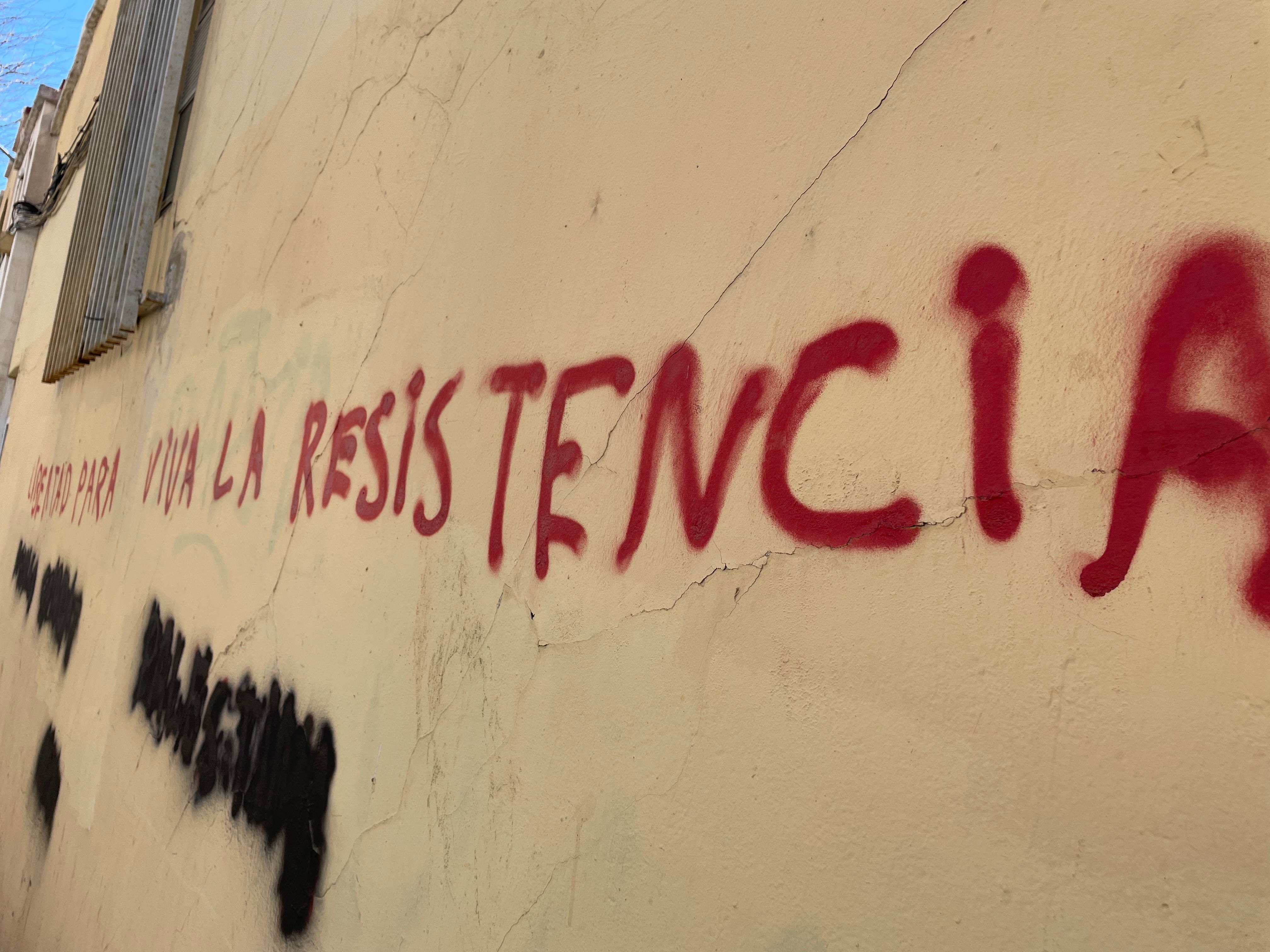
(Unknown artist, Valencia, 2026)
If professional development fails teachers by rendering their knowledge illegible, then the deeper question is not how to improve professional learning, but how to restore the conditions under which professional thinking can occur at all. What is at stake is not effectiveness. It is intellectual life.
As we argue in the first part of this series of essays (available here), dark professional development becomes intelligible not as resistance theatre or as an alternative programme, but as a response to a specific harm: the systematic disruption of noetic syntonia. When teachers are compelled to comply with frameworks that contradict their experience and judgment, intellectual life is forced out of alignment. They know one thing, are told another, and must enact a third. Over time, this dissonance produces exhaustion, alienation, and moral injury, not because teaching is inherently unsustainable, but because authentic knowing is rendered professionally dangerous.
Noetic syntonia names the condition in which intellectual life can breathe. As we explore in more detail here, noetic syntonia is the resonance between what a professional genuinely knows, what they are ethically compelled to acknowledge, and what they are permitted to express in concert with others. When this resonance is present, thinking vibrates freely. It remains responsive to context, open to uncertainty, and capable of judgment. When it is disrupted, intellectual life becomes performative rather than generative. One learns how to speak, not how to think.
Conventional professional development systematically produces noetic dissonance. It does so by excluding precisely those dimensions of teaching that matter most: ethical ambiguity, contextual judgment, uncertainty, failure, and not knowing. Dreaded twilight workshops offer solutions to problems teachers do not recognise, framed in languages that erase the specificity of classrooms and communities. The result is not merely frustration or boredom, but a painful split between professional being and professional performance. Teachers are asked repeatedly to rehearse certainty where none exists, and to perform alignment where their judgment resists it.
This dissonance is inseparable from the political economy of time. Drawing explicitly on Karl Marx's analysis of labour, value, and what he described as freie Entwicklung (free development), contemporary professional development can be understood as part of capitalism's systematic colonisation of time. Under capitalist conditions, all time is pressed toward negotium, time organised around productivity, accumulation, and the extraction of surplus value. Even moments ostensibly devoted to learning are rendered accountable and instrumental, required to demonstrate their contribution to future output.
Professional development thus becomes a site for the extraction of surplus value from teachers' cognitive and affective labour. Intellectual activity is tolerated only insofar as it can be reinvested into measurable improvement, efficiency, or performance. This is not simply pressure or workload intensification. It constitutes a form of temporal violence, in which the possibility of otium, time freed from instrumental demand and oriented toward understanding rather than output, is systematically foreclosed. Under such conditions, noetic syntonia cannot be sustained, because intellectual life itself is incompatible with the demands of value production.
This is why the demand for measurable outcomes is so destructive. Measurement requires standardisation. Standardisation requires that intellectual activity conform to predetermined forms. Noetic syntonia cannot be standardised without being destroyed. Resonance does not occur at a single frequency. Each teacher's knowing is shaped by particular students, histories, and constraints, even as it finds harmonics with others engaged in similar struggles. Noetic syntonia in this sense is essentially collective and polyphonic, by necessity not always perfectly in tune, but always the perfect result of a fleeting confluence of resonances. To demand that this resonance submit to metrics, to unravel a fleeting harmony into its constituent wavelengths, is to replace intellectual life with its simulation, growth with performance, and learning with its proxy.
Dark professional development emerges as the site where noetic syntonia is quietly restored. It does not seek validation. It does not promise improvement. It does not guarantee insight. What it offers instead are conditions. It offers time, space, and relational trust sufficient for thinking to unfold without immediate justification. These conditions are increasingly rare within institutions organised around productivity and visibility, which is why dark professional development must operate beyond surveillance.
Here, the concept of otium becomes essential. Otium names a form of time freed from instrumental demand. It is time not oriented toward outputs, applications, or measurable returns. Contemporary educational institutions have largely eliminated such time, colonising planning periods, breaks, and informal gatherings with sanctioned activity. Professional development is scheduled, facilitated, and evaluated. Nothing is allowed simply to linger. Yet intellectual life requires lingering. It requires that the chords struck resonate and then decay to nothingness. Thought unfolds according to rhythms that cannot be mandated. Without otium, noetic syntonia cannot be sustained.
Otium alone is not enough. It requires a spatial correlate, which might be called the clearing. These clearings operate as what Heidegger termed Lichtung, not empty spaces but sites of unconcealment, where what has been hidden by the apparatus of performativity might briefly show itself. In Heidegger's terms, the clearing doesn't oppose the forest; it allows the forest to be seen. Similarly, these unofficial spaces of professional learning don't reject institutional frameworks but reveal what those frameworks necessarily obscure in order to function. Dark professional development operates within such Lichtungen, not as resistance to institutional knowledge but as the condition for its possibility.The clearing is not an officially designated space, nor a permanent refuge. It is a temporary opening within dense institutional growth where surveillance loosens and something unexpected might emerge. It is neither wilderness nor cultivation, but the space between. Fragile, contingent, and easily reclaimed by productivity demands, the clearing cannot be planned or scaled. It appears through withdrawal, through collective refusal to fill every moment, and through the quiet protection of spaces where thought is not immediately put to work.
Within these clearings, dark professional development takes form. Teachers gather not to acquire strategies, but to think together about what they are encountering. They speak about contradictions between policy and practice, ethical dilemmas that admit no solution, failures that resist redemption narratives. These conversations may not lead anywhere. They may circle familiar frustrations. They may generate more questions than answers. From a performativity perspective, they are inefficient. From the perspective of intellectual life, they are essential.
This is why dark professional development must resist instrumentalisation, even in the service of critique. To demand evidence of its effectiveness would be to reincorporate it into the very logic it refuses. Its value cannot be demonstrated without being undone. The clearing shelters precisely because it remains opaque. Otium matters precisely because it refuses justification. Dark professional development cannot promise transformation. It can only sustain the conditions under which transformation might occur, or might not.
This uncertainty is not a weakness. It is its defining character. Professionalisation regimes operate through temporal violence, orienting teachers toward an idealised future competence that legitimates present inadequacy. Dark professional development refuses this teleology. It asserts the epistemological sufficiency of teachers' present knowing while remaining open to growth that emerges from collective inquiry rather than external prescription. In contexts marked by racialised and colonial violence, this refusal becomes explicitly political, creating protected spaces where teachers can name how accountability regimes pathologise communities while claiming benevolent concern.
To engage in dark professional development is to practise negative capability. It is the capacity to dwell in uncertainty without reaching prematurely for solutions, frameworks, or guarantees. As we have argued elsewhere, this requires unusual courage and encouragement, or taking heart. This is not the heroic resistance celebrated in official narratives, but the quieter courage to protect time that produces no outcomes, to sustain inquiry that may not yield improvement, and to remain with questions that resist closure. Teachers create these spaces knowing they cannot know whether anything valuable will emerge, or whether their conversations deepen understanding or merely provide temporary refuge from unchanged conditions.
And yet, the void proves fertile.
Dark professional development is not an alternative programme. It is an ontological and epistemological insurgency. It challenges performativity's claim to exhaust the meaning of professionalism by insisting that teaching's most essential knowledge emerges from practice itself, circulates through collective judgment, and resists capture by extractive regimes. It honours intellectual work not by measuring it, but by creating conditions under which it can resonate.
In these moments beyond surveillance, teachers restore the alignment between knowing and being that conventional professional development systematically fractures. They model intellectual integrity not through compliance, but through attentiveness to complexity, paradox, and uncertainty. From this resonance, pedagogical imagination becomes possible again, not as optimism, but as responsibility.
The clearing opens. Otium beckons. Teachers gather without guarantees.
Here, in the shadows of performativity, dark professional development persists. Not as refusal alone, but as the quiet cultivation of intellectual life itself.
Thank you for this. The way we look at time needs composting - learning unfolds more sustainably if there’s enough tenderness and relatedness - a clearing feels right!
So much food for thought. This bit resonates in how I learn these days. It can’t be forced.
‘Yet intellectual life requires lingering. It requires that the chords struck resonate and then decay to nothingness. Thought unfolds according to rhythms that cannot be mandated.’